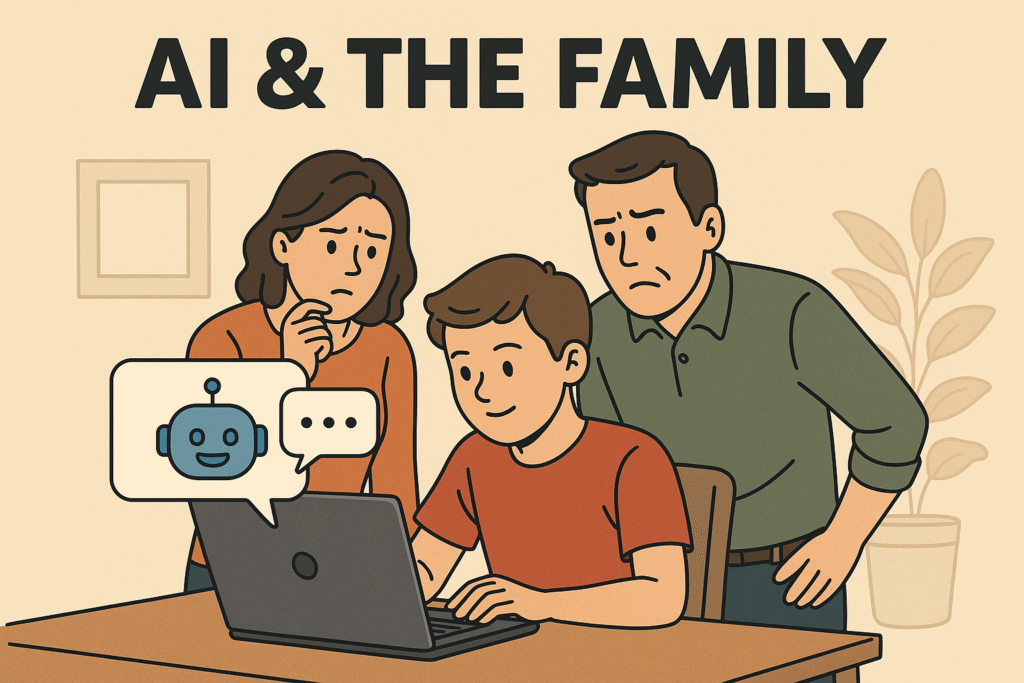
For many parents, hardly a day goes by without the mention of “Artificial Intelligence”, shortened by either “A.I.” or “AI”. For children and youth, AI is becoming an ever-present tool and, unfortunately, companion. Parents must therefore become familiar with AI and the PROS and CONS of its use by our children. As with the vast majority of new technologies, AI by itself is neither “good” nor “evil” (so far). How AI and the family interact can both help and harm.
What IS Artificial Intelligence?
Often people hear the term “Artificial Intelligence” and immediately think of computer systems that have run amok and threaten humanity. Some of the more infamous AIs are
- HAL 9000 from SPACE ODYSSEY 2001 (1968)
- COLOSSUS from COLOSSUS: THE FORBIN PROJECT (1970)
- SKYNET from the TERMINATOR movies (1984-2019, so far)
In these movies the computers seemed “alive”.
Let us start by defining exactly what we mean when we speak of Artificial Intelligence by looking at what it is, how it works, and what it cannot do.
What is AI?
AI is technology, a combination of hardware and software, that can imitate some forms of human thinking and behavior. This included learning patterns, recognizing speech, making decisions based upon data, and even creatingitems, both hardware and software. AI requires a huge amount of processing power and storage.
How does AI work?
Aside from the computer hardware, AI is merely a collection of software programs created by people. These programs run “algorithms,” or sets of rules to be followed, that are designed by humans. The programs also enable “machine learning,” which is merely a way for the program to adjust its rules and patterns based upon the data it receives and interacts with.
What is AI unable to do?
AI is not “alive.” It just seems that way. AI cannot feel emotions nor canit “feel” anything. It has no desires. AI cannot understand itself. It may seem like it is “thinking,” but it really is only executing the software it received from its creator. AI is not a living creature. AI is merely a tool. Let’s look at the upside of AI and the Family!
What Are The Benefits of AI For Families?
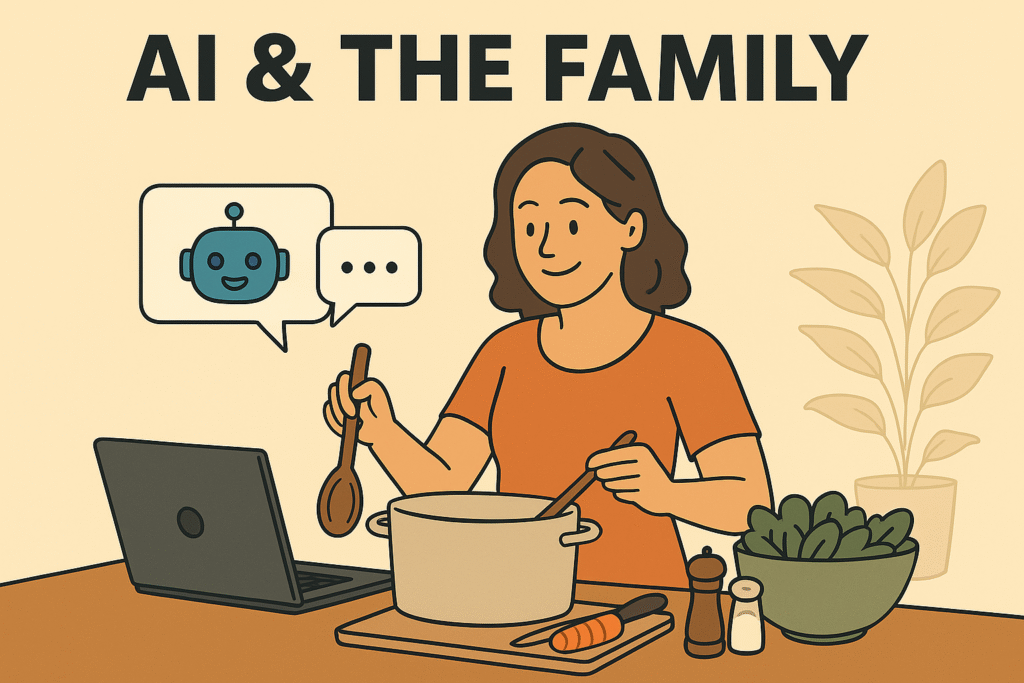
Within the family, AI can be very useful in many ways:
- Voice assistants like Alexa, Siri, or Google Home can help manage many household tasks.
- Homework helpers, like ChatGPT, Khanmigo, or Grammarly, can help by explaining ideas to students in simple terms.
- AI apps can help with both meal and time management.
- AI security systems can recognize family members and alert parents to potential problems around the house.
- AI can assist those with special needs with accessibility features like voice-to-text, screen readers, or real-time closed captioning.
- AI can help with budgeting and financial management
Here are some articles that illustrate potential benefits of using AI in the home:
- Smart home technology to support older people’s quality of life
- Hisense leans into AI at IFA 2025 – smart air conditioner is the one to watch
- AI is Here to Stay. 4 Things Parents of Teens Should Know
- How your kids can use the power of AI … without compromising learning
- Study Finds Parents Relying on ChatGPT for Health Guidance
- The Best Way to Use AI for…Financial Planning, Starting a Hobby—and More (Wall Street Journal, requires subscription)
- I asked AI to help with dinner and it took so much off my mental load
- How AI is shaping the next generation of learning tools for students
These are just some of the many ways AI can help the family. Additionally, AI is even being integrated into new household robots that “learn” what needs to be done around the house! (Please let them learn to fold and iron laundry!!!!)
But, just like household cleaners, tools, and other items in the house, a good parent makes sure that safeguards are in place!
The Downside of AI in the Home
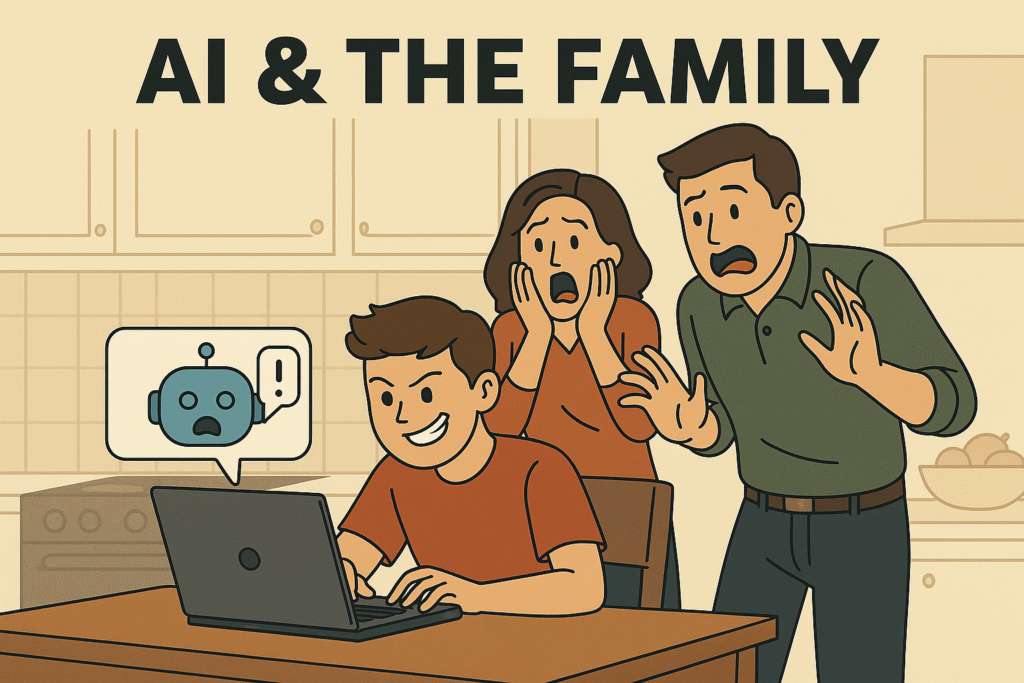
When looking at AI and the family we have to realize that there are both challenges and risks. Remember, AI itself is not evil, but it can be USED for evil or damaging purposes. It use by our children must be guided by wisdom, self-control, and sound biblical values. Here are examples of how AI use can be detrimental or outright dangerous.
- Both children and adults may start depending on AI to provide answers instead of learning and developing problem-solving skills of their own.
- Kids may use AI to do their homework for them, not to explain topics and techniques so that they understand the material better and can do the homework on their own.
- Family members may come to depend on AI chatbots for “social” interaction instead of interacting with family and “real people.”
- AI systems learn from the whole Internet. Not everything on the Internet is wholesome and appropriate for children, or even adults.
- Privacy around the home may be impacted.
- Screen time can crowd out time for the spiritual disciplines.
- AI CAN BE INACCURATE!!! It can generate material that “sounds right” but isn’t biblically or ethically sound.
- AI can be interpreted as a source of truth, even taking precedence above parents and other trustworthy adults
Here are some articles that illustrate potential problems with AI in the home. Keep in mind, these are some of the more extreme examples in order to “make the news”:
- 5 Ways AI Is Affecting How Your Kids Grow Up
- Their teenage sons died by suicide. Now, they are sounding an alarm about AI chatbots
- Why AI companions and young people can make for a dangerous mix
- Rising Use of AI in Schools Comes With Big Downsides for Students
- She says Tesla’s chatbot asked her 12-year-old for nudes
- Meta’s AI rules have let bots hold ‘sensual’ chats with kids, offer false medical info
What To Do About AI?
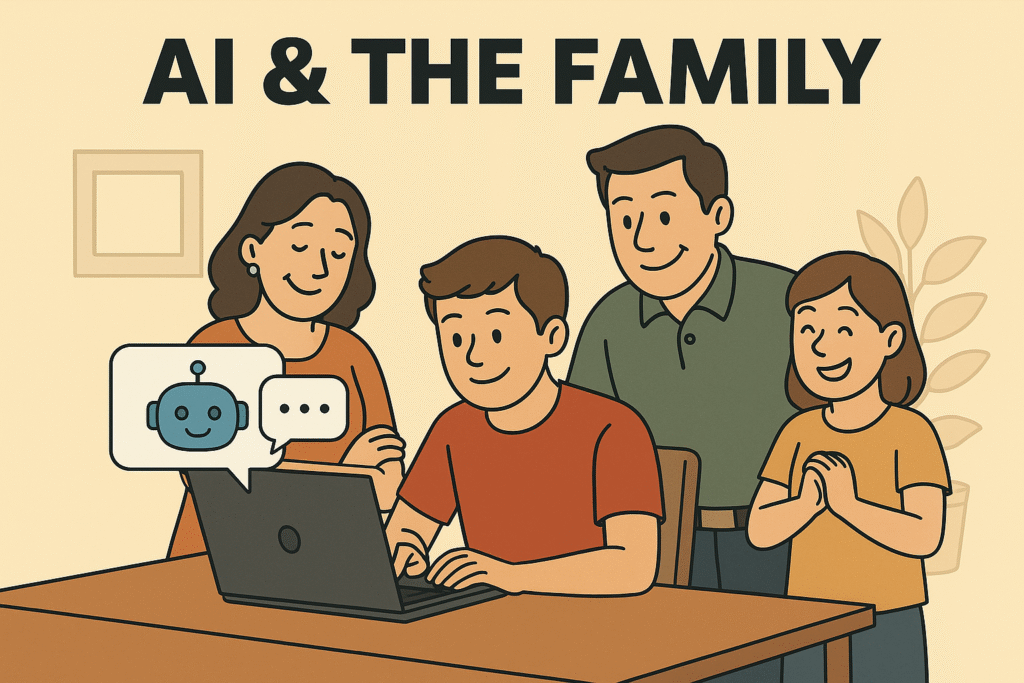
With all of this, what should responsible parents do with regard to AI and teh family?
Here are my recommendations:
- Always remember that AI is still continually developing and that there are practically NO PARENTAL CONTROLS as of November 2025. They are coming, but they are not there yet, and they will NOT be 100% effective! (Kids are great hackers!)
- AI is not a cheap babysitter. Don’t fall to the temptation to let your children “play with it” to keep them occupied/quiet.
- Because AI utilizes the whole Internet for its database, parents should restrict the free use of AI to children 15 and older.
- When children (of any age) need to use AI for schoolwork, parents MUST supervise this use to ensure the child is not letting the chatbot do their homework for them, or using it inappropriately!
- Discuss the boundaries your family must have for the use of AI. Include the dangers of using AI to prank or embarrass peers.
- Emphasize that AI is not GOSPEL! AI can and does make mistakes! (Sometimes it seems downright bullheaded!!!!)
- Keep parents’ passwords for your AI accounts private from the children.
- SUBSCRIBE to this blog, as I will be posting a lot about AI in the coming year.
As with all things Internet, AI is not a reason to panic. Wise parents must learn about AI, its benefits and dangers, and what to do. Here are some articles on parenting in the Age of AI:
- Parents’ Ultimate Guide to Generative AI
- A Parent’s Guide to AI
- Artificial intelligence safety tips for parents
- Eight tips for using AI safely
- Navigating AI as a Parent: How to Support Your Child’s Digital Well-being
Thank you for reading this article! Please share it with your friends and family!
In addition to subscribing to this blog, be sure to sign up on our website for our newsletter and to join us on Facebook!
Join us in our work to educate and equip parents to keep their children safer with technology by donating on our website! Your donation enables Knights’ Quest to keep up with the ever-changing hardware and software that our kids get involved with. And you know how expensive that is!
Note: And, yes, I do make use of AI in the ministry! During the research for and creation of this post, I made use of the AI chatbot ChatGPT. ChatGPT was used to create all the graphics as well as perform research. It was not used to create the article, itself!


 UPDATED: 2024
 Most parents want to protect their children from inappropriate and harmful material on the Internet. The problem is: HOW?